
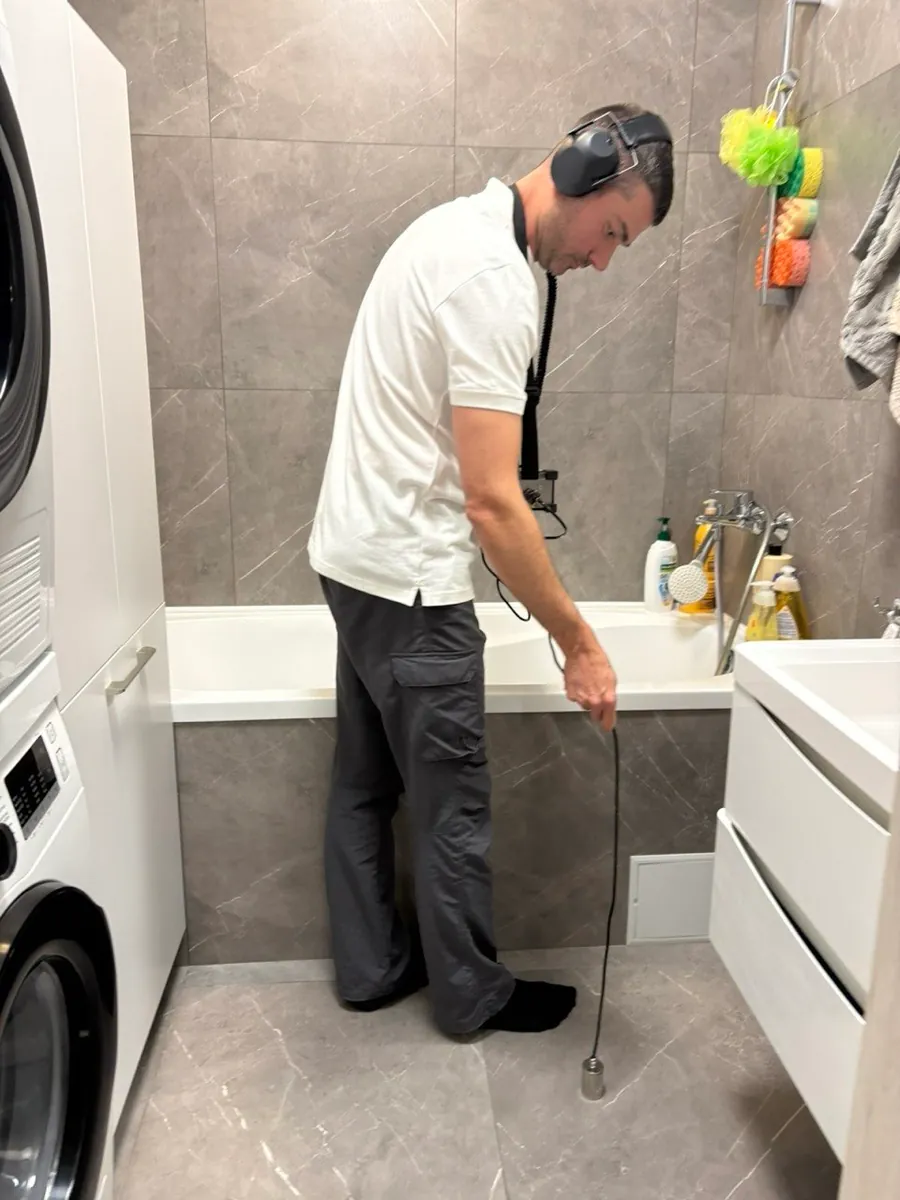
Is a wall getting damp, water consumption rising or heating pressure dropping? We explain the signs of a hidden leak, how to choose a method and how to prepare for the survey.
Leak detection starts with a description of the problem: where the water appeared, which system runs nearby and when you noticed the changes. This information helps the specialist choose the section and the inspection method, and helps you understand which service to order.
The largest wet patch does not necessarily mark the place where the pipe is damaged. Water can spread through structures, so the decision to open a wall or floor should be made after checking the possible source.
Which signs of a leak are worth recording
Describe wet patches on walls, ceilings or floors, unusual water consumption, a pressure drop or the need to top up the heating often. Say whether the problem is constant or appears after using water, starting the heating or after rain.
Moisture alone does not confirm damage to the water supply: other possible sources of dampness must be considered too. Take photos and note when you noticed the changes. If earlier inspection or repair results have been kept, tell the specialist about them.
Apartment, private house or underground pipe
In an apartment it is important to distinguish water supply, heating and other utilities. Tell us the floor, the rooms showing signs of leaking, whether there is underfloor heating and access to system nodes. If water has appeared at your neighbors', discuss in advance the possibility of inspecting both apartments.
In a private house, checks may be needed for both internal systems and the water service entry or pipes on the plot. If heating pressure drops, tell us about the system's operating mode and the changes you have noticed. These signs alone cannot identify a single cause remotely - the scope of the check is agreed separately.
For an underground water pipe or heating network, a route diagram, approximate length, information about the pipe material and access to manholes are useful. If the pipe location is unknown, discuss the need for utility tracing before searching for the leak.
Which method helps find the leak
Acoustic search uses noises associated with water leakage. The specialist compares signals in the accessible sections and evaluates them together with the conditions at the site. A loud sound alone does not replace checking its source.
A thermal imaging inspection shows the temperature distribution on a surface. A thermal imager cannot see through a wall and does not measure moisture directly. Temperature differences can help choose an area for further checks, including moisture measurement.
The moisture measurement method helps assess the dampness of accessible structures and compare areas. The results are considered together with other signs: the dampest spot is not always the source of the water.
The tracer gas method involves using special equipment on a prepared section of the system. A specialist determines whether the method is suitable, whether the network can be shut down and what preparation is needed. Do not change the pressure or feed gas into the pipeline yourself.
There is no universal method for every pipe and every room. When you get in touch, it is best to describe the task and access to the systems, and choose the inspection method together with the specialist.
What to prepare before the specialist arrives
Prepare the address, floor, type of property and a short description of the signs of the problem. If available, add photos, a floor plan, a pipe diagram and information about previous repairs. Specify which components and rooms will be accessible for inspection.
Before the visit, agree on the time, the scope of the inspection and the preparation of the system. Do not dismantle structures based only on an assumption about the leak location. If diagnostics require changes to the network's operating mode, arrange them with the specialist in advance.
What the cost depends on and what to do after the search
The cost depends on the type and size of the property, access to the pipes, the length of the section, the methods required and the visit conditions. The "from" price on the service page is a guideline; the final scope and cost are agreed before work begins.
After the inspection, ask which section was identified, what exactly could be checked and what next steps are recommended. Leak detection and pipeline repair may be separate jobs, so discuss in advance whether a plumber and opening of structures will be needed.